© Plan International
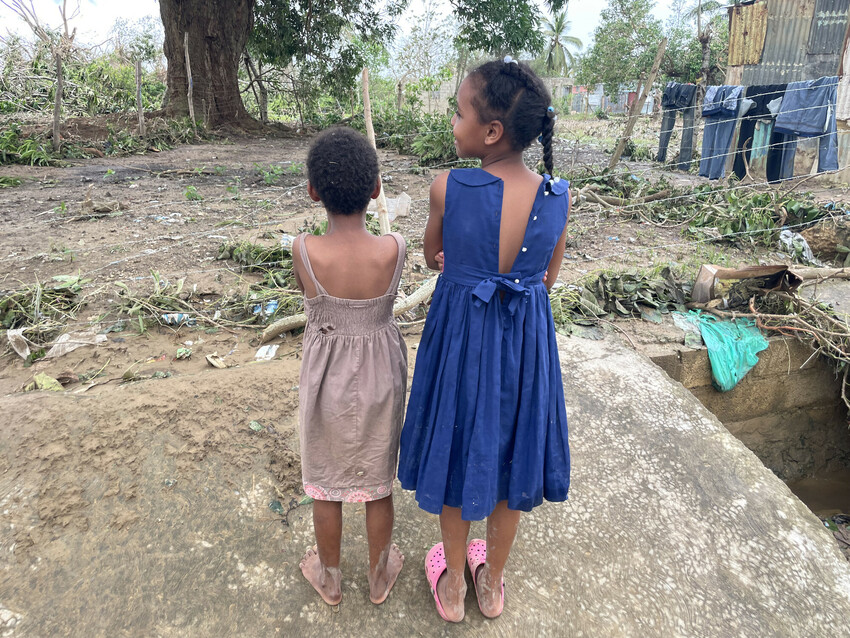
Phaedria was 12 years old when one of the strongest hurricanes ever tore across her home in the Caribbean. To this day, she can still vividly remember the howling of the wind, the moment their roof succumbed and lifted away, exposing her family to the bleak gray skies. They huddled together underneath a table. Time slowed down. Their fervent prayers whisked away by the wind or deafened by thunder. Then it stopped and there was silence.
The next morning, the world she knew was gone. Their breadfruit and banana trees lay horizontally across the yard. The immediate priority was to find food and shelter. There was no electricity. Water had to be carried from the nearby river. Her school and many other buildings were completely destroyed. For weeks they moved around dazed, thinking only of what was needed to survive.
As devastating as the experience was, Phaedria was one of the fortunate ones. Within three months, she was able to restart schools, albeit only for 1.5 hours a day, as the remaining structure with a few classrooms had to house 600+ students and that was only possible by implementing a shift system. In some cases, classrooms were covered with tarpaulins as there were no building materials to rebuild the roofs. She was lucky, her education was uninterrupted and that enabled her to proceed to a graduate degree in Chemistry and an academic and corporate career with little difficulty.
More than three decades later, she keeps thinking about girls standing in the rubble today, stripped of everyday basics that we often take for granted. Many of them will not get the chance she got - unless the right interventions are implemented..
The absence of water also devastates
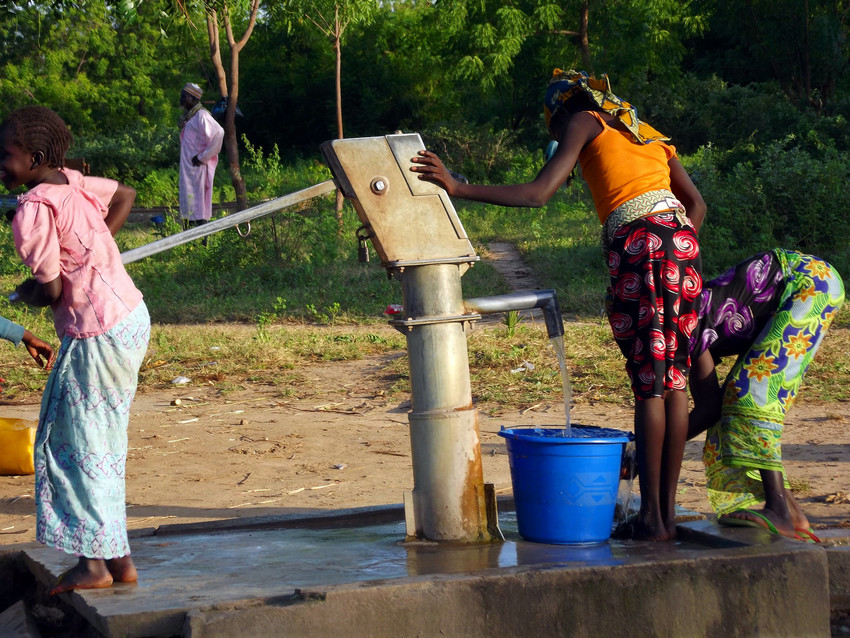
If too much wind and water can change a life trajectory, Here in Cameroon, the opposite holds true. You do not need a hurricane to see a climate disaster. As Nytam looks at the Far North, where Minawao, the largest camp for Nigerian refugees in the region, stands in an arid landscape she sees. Families who come there fleeing conflict. What they find is a place where water is scarce, and where every drought season makes it scarcer.
In July 2020, the UNHCR reported that water supply for Nigerian refugees in Minawao fell from 15 to 13 litres per person per day after water trucking stopped for lack of funds. UNHCR's standard for long-term camps is 20 litres, and its 2023 global report still lists Cameroon among countries where ageing water systems and new arrivals leave supply short. When water is that scarce, girls pay first. They are the ones sent to queue and to walk long distances to fetch water. They leave school and younger siblings behind.
Imagine a girl on her period who cannot find enough clean water to wash. Now picture a hundred girls in that position at once, where hygiene is a luxury and school slips further away.
Long, unlit routes to water are places where girls are at risk. Reports from displacement camps across this region, including northeast Nigeria, document girls pressured into sex in exchange for food and assistance. Where wells run low, tension can also rise between communities sharing too little.
This is what the climate crisis looks like on the ground. It does not just dry up the earth; it strips away dignity, safety, and futures.
Different extreme weather. Same debilitating story - opportunity and development dried up or blown away.
The weather gets more extreme. Girls get more exposed.
If the hurricanes of Phaedria’s childhood were terrifying, today's are next level. In 2025, Hurricane Melissa became the first Category 5 storm to make landfall in Jamaica in its modern history, and the second most intense Atlantic hurricane on record. In 2024, Hurricane Helene tore from Florida's Gulf Coast into the mountains of North Carolina and became the deadliest hurricane to hit the US mainland since Katrina. World Weather Attribution found that climate change made Helene's winds about 11% stronger and its rain about 10% heavier, and made the hot Gulf waters that fed it 200 to 500 times more likely. Scientists at World Weather Attribution found that climate change made the ocean and atmospheric conditions behind storms like Melissa about six times more likely.
The physics learnt under that tarpaulin explains why. Warmer seas are fuel they pour heat and moisture into a storm, so it strengthens faster and carries more rain. More fuel means faster, wetter, more violent storms — and less time to prepare.
Drought runs on the same physics in reverse. A hotter atmosphere is a thirstier one, pulling more water out of soils, crops, rivers and lakes. In the Lake Chad basin, which reaches into Cameroon's Far North, erratic rainfall and high temperatures drive heavy evaporation, and the lake has at times receded by as much as 90% over the past 50 years. When rain does come, it increasingly falls in short, intense bursts that run off baked ground rather than soaking in, bringing flash floods without ending the drought.
But science doesn't explain who gets hurt most. Inequality does. When a disaster strikes, girls are often the first pulled out of school to fetch water, mind siblings or earn money. Plan International's State of the World's Girls 2026 report, released just last week, found that girls whose schooling was disrupted by climate shocks were twice as likely to marry young or face an unintended pregnancy.
The education classroom that saved Phaedria’s and Nytam's future is exactly what a storm or a dry season takes from a girl first.
What happens after the disaster
Natural disasters do not only destroy buildings. They destroy the structures that keep girls safe.
Shelters without lighting or lockable toilets. Long walks for water. Families who have lost everything and see an early marriage as one less mouth to feed. Stress, unemployment and overcrowding inside homes. Each of these is a door through which violence walks in.
The numbers are now hard to ignore:
• Every 1°C of global warming is associated with a 4.7% rise in intimate partner violence, according to the UN Spotlight Initiative. At 2°C, that could mean 40 million more women and girls experiencing it every year by 2090 (source).
• One study cited in the same report found a 28% increase in femicide during heatwaves.
• Over a quarter of girls (28%) surveyed by Plan International said violence against women and girls increased after climate-related events, and 36% saw more child marriages (source).
• Femicide was already a crisis before the climate multiplier. In 2024, around 50,000 women and girls were killed by partners or family members — one every 10 minutes (source).
Unfortunately, the money is not following the risk. Only 0.04% of climate-related development assistance focuses primarily on gender equality.
The women and girls paying this price live overwhelmingly in the Global South — in the communities that did the least to cause climate change and extreme weather conditions..
We are not helpless - we can actually do something
We all have agency and can leverage the means we have to make an impact and change the forecast for a young girl. .I don't want you to finish this article feeling helpless. Here are some options to consider where each of us has leverage.
If you are an individual:
1. Give to women-led responders, not just big appeals. Local women's organisations are often first into shelters and last to leave. Ask where your donation goes after a storm.
2. Mentor a girl in STEM. One science teacher changed Phaedria’s and many other girls' lives. An hour a month, online, can change someone else's.
3. Use your voice before COP31 in November 2026. Write to your representatives and policy makers and ask one question: what share of our climate finance protects women and girls?
4. Ask before you give. For example, before donating to any NGO, ask about their assessment of the situation and whether those affected and closest to the community were involved in designing the intervention." If they cannot answer, then the solutions may not be the most effective..
If you lead an organisation:
5. Make your climate and ESG strategy gender-aware. If your disaster-response or supply-chain plans do not mention violence against women, they have a blind spot.
6. Fund scholarships and "education in emergencies" programmes. Keeping girls in school is the single most consistent protection against early marriage and violence. For example, Plan International has a flagship program “Education Uninterrupted” that ensures that education continues from pre-school to end of secondary school.
7. Make water points safe by design. For example, In Cameroon, companies and schools can fund a solar-powered tap or borehole within school grounds, with lighting on the path. A girl who does not leave to fetch water stays in class, and stays safer. Furthermore, local councils and water agencies can place new water points a short, well-lit walk from homes, and to record who collects water and how far. What gets counted gets fixed.
If you shape policy or funding:
8. Design shelters and relief with women in the room. Lighting, locks, separate sanitation, menstrual products, contraception and survivor services belong in every emergency package — not as add-ons.
9. Put gender-based violence in national climate plans and budgets. Move that 0.04% figure. Set a defined share of adaptation finance for adolescent girls, and collect data so we can see what works.
Education uninterrupted
More than thirty years ago, a hurricane took a school, but teachers gave it back. In Minawao today, it is not the wind that empties the classroom. It is the long walk for water. Whether the disaster arrives as a storm or as a dry season, when we protect a girl's education and safety through it, we do not just save her. We gain the scientist, the engineer, the artist, the leader who will help the rest of the world adapt and thrive.
This year's very strong El Niño shows how connected these disasters are. As the Pacific heats up, it reshapes weather around the world, calming storms in one ocean while fuelling them in another, and bringing drier seasons to some regions and floods to others. Somewhere, the next hurricane is already forming over warm water. In the Far North, the next dry season is already on its way.
The question is whether the girl in their path will still have a classroom, a safe place to sleep and a promising future when they have passed.
Which of the ten actions will you take this month? Tell us in the comments, and tag someone who should be part of this conversation.