Education Uninterrupted

Ready for school, on time.

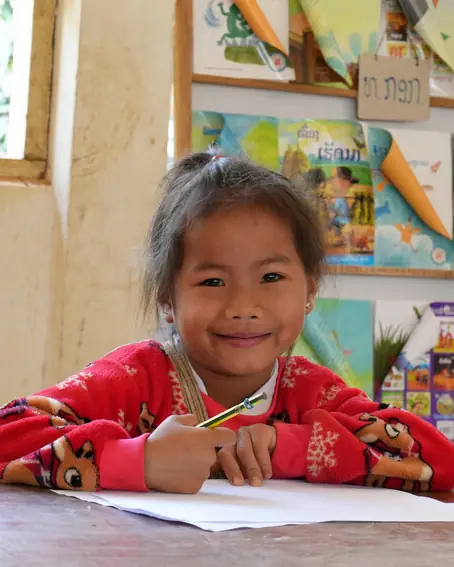
Plan International’s accelerated pre-primary model, building the school readiness of children aged four to six who have no access to early childhood education, so that they start primary school on time rather than late or not at all.

A young girl at her desk with a pencil and paper, smiling at the camera.

© Plan International

What it is

A platform for scale, not a project.

The model

Accelerated pre-primary

An accelerated pre-primary education model that aims to build the school readiness of disadvantaged children without access to early childhood education. Implemented in Laos, Cambodia, Myanmar and Tanzania, and with Syrian refugees in Turkey, reaching 29,000 children, half of them girls. A high-impact model ready for scale. Source: Plan International, Education Uninterrupted flagship presentation (May 2026), slide 12; I am Ready Program Brief, p2.
Where it is going

Into national systems

In Laos it was included in the 2021-2025 education sector plan and is delivered directly by the Ministry of Education. In Tanzania the government has taken it forward through its Shule Bora programme. Source: Plan International, I am Ready Program Brief, p4; Education Uninterrupted flagship presentation (May 2026), slides 13 and 15.

What it is built to change

Projected outcomes.

  1. Increased school readiness

    Gains in pre-literacy, pre-numeracy, socio-emotional skills and school language readiness for non-mother-tongue learners, measured at the point of Grade 1 entry.

  2. Higher on-time enrolment

    Particularly among girls and children from excluded groups, who are disproportionately likely to enter school late or not at all.

  3. Expanded pre-primary access

    A greater proportion of underserved children reaching structured early learning in the communities where it runs.

  4. Government capacity

    Ministries of Education equipped to adapt, deliver and eventually finance a cost-effective school readiness model inside national systems.

Why early

What a year of schooling is worth.

Investing in early childhood education is investing in girls’ futures.

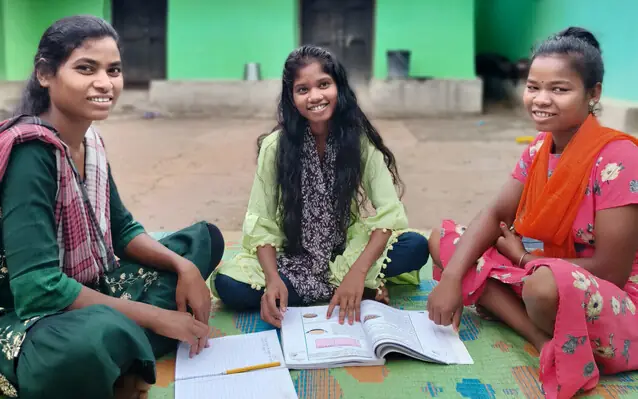
This is not a project, it is a platform for scale and systems change. Integrated into national education strategies and sector plans in partnership with Ministries of Education, Plan International is providing a platform that ensures the physical, cognitive, social, emotional and language development needed during early childhood, providing a critical foundation for a child’s wellbeing and resilience.

Three girls sit on a mat outside a house, studying with an exercise book and a textbook open, smiling.

© Plan International

+10 to 20%

Income, per year of primary education. Source: Plan International, Education Uninterrupted flagship presentation (May 2026), slide 20.

+18%

GDP per capita, per additional year of education. Source: Global Girls Foundation, supplied 30 September 2026.

50%

Children of educated mothers are 50% more likely to survive past age five. Source: Global Girls Foundation, supplied 30 September 2026.

133 million

Girls out of school, worldwide. Source: Plan International, Inclusive Quality Education: A snapshot of our evidence from 2025, p3: “Over 272 million children and youth – including 133 million girls – remain out of school”.

Marginalised girls are not the hypothetical. They are the 133 million girls out of school, systematically overlooked by education systems. They are the girls for which Education Uninterrupted was built.

What it costs

Investing in early childhood education.

Investment
€500,000 per country.

Source: Global Girls Foundation, supplied 30 September 2026.

Reach
1,000+ girls and 1,000+ parents.

Source: Global Girls Foundation, supplied 30 September 2026.